
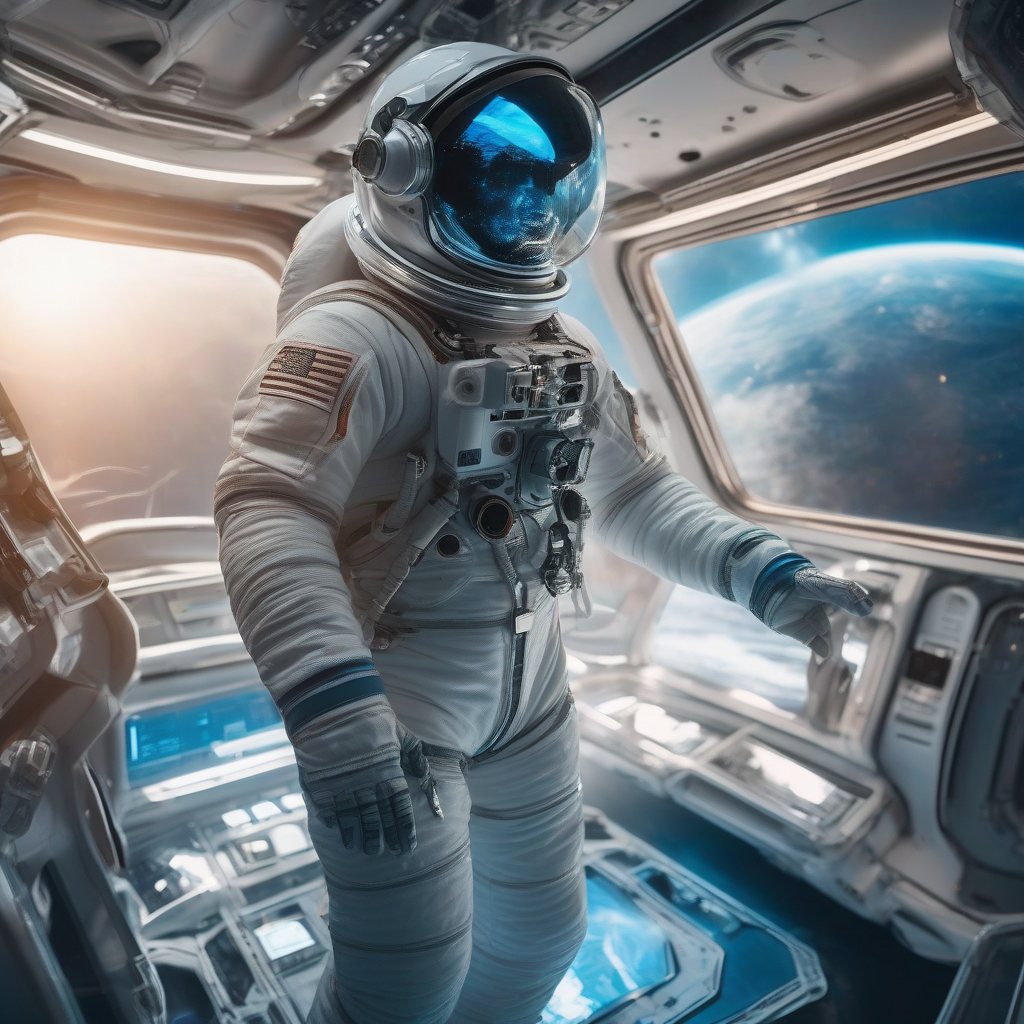
# How Virtual Reality Could Combat Space Motion Sickness for Returning Astronauts
Space exploration is one of humanity's most remarkable achievements, pushing the boundaries of science, engineering, and human endurance. While astronauts venture to the stars, their bodies endure profound changes caused by microgravity. One common challenge they face is space motion sickness, a disorienting condition that can linger even after their return to Earth.
As NASA and other space agencies prepare for ambitious missions like Artemis to the Moon and the eventual human journey to Mars, innovative solutions are required to ensure astronauts stay healthy during and after their missions. Enter virtual reality (VR)—a cutting-edge technology that could revolutionize how astronauts adapt to Earth's gravity after months in space.
In this blog post, we’ll explore how VR could help astronauts combat space motion sickness, the science behind this condition, and the exciting potential of integrating immersive technology into space exploration.
---
What Is Space Motion Sickness?
Space motion sickness, also known as Space Adaptation Syndrome (SAS), occurs when astronauts experience nausea, dizziness, and disorientation during spaceflight. These symptoms arise because the inner ear, which helps maintain balance, no longer functions the same way in microgravity.
When astronauts return to Earth, their bodies must readjust to gravity—a process that can be equally disorienting. After months in space, some astronauts report difficulty walking, standing, or maintaining their equilibrium. This is because their vestibular system, responsible for balance and spatial orientation, has adapted to the weightlessness of space.
Symptoms and Impact
The symptoms of space motion sickness can range from mild to severe and typically include:
- Nausea
- Vomiting
- Headaches
- Fatigue
- Vertigo
While the condition is rarely life-threatening, it can hinder an astronaut’s ability to perform critical tasks during space missions or post-return recovery. For example, after Scott Kelly's historic 340-day mission aboard the International Space Station, he described the feeling of being “like a newborn” as he struggled to adapt to gravity upon returning to Earth.
---
Fighting Space Motion Sickness with Virtual Reality
A Revolutionary Tool for Vestibular Rehabilitation
Virtual reality is emerging as a promising tool to help astronauts recover from space motion sickness. VR technology creates immersive environments that simulate real-world scenarios, allowing users to interact with and adapt to dynamic visual and spatial cues.
For astronauts, VR can serve as a controlled, customizable training ground for their vestibular system. By exposing them to simulated gravity-based environments while gradually reintroducing Earth-like physical movements, VR could accelerate their recovery and reduce the severity of motion sickness symptoms.
How VR Works to Recalibrate Balance
The vestibular system relies heavily on the brain’s ability to interpret signals from the inner ear, eyes, and muscles. In microgravity, these signals become misaligned:
- The inner ear no longer detects changes in gravity.
- Visual cues from the surroundings conflict with the body’s sense of orientation.
VR can help recalibrate the brain’s interpretation of these conflicting signals by combining:
- Visual Input: VR environments simulate Earth-like landscapes and movements, helping the brain reconnect spatial orientation with visual cues.
- Physical Feedback: Some VR systems include haptic feedback and motion platforms that mimic the sensation of walking or moving in gravity.
This combination trains the brain to integrate sensory information correctly, easing astronauts back into Earth’s gravity.
---
NASA’s Interest in VR for Post-Flight Recovery
NASA has long been at the forefront of exploring new technologies to improve astronaut health. Virtual reality is already being utilized for training astronauts before missions, such as simulating spacewalks outside the International Space Station (ISS). Now, researchers are investigating how VR can play a crucial role in post-flight rehabilitation.
VR-Based Studies and Experiments
One notable example is NASA’s collaboration with the Translational Research Institute for Space Health (TRISH). TRISH focuses on how space exploration impacts human health and supports cutting-edge research into countermeasures for space-related conditions.
In recent years, VR studies have explored its potential to:
- Improve spatial awareness and motor skills during recovery.
- Reduce nausea and vertigo after prolonged exposure to microgravity.
- Help astronauts regain confidence in their ability to navigate Earth environments.
Additionally, VR systems are portable, cost-effective, and easily adaptable to individual astronaut needs, making them an ideal solution for future missions.
A Glimpse Into the Future
As NASA prepares for missions like Artemis III, which aims to land astronauts on the lunar surface in 2025, VR could play a vital role in ensuring astronauts return to Earth physically and mentally ready for future exploration.
Looking even further ahead, the challenges of long-duration Mars missions—where astronauts may spend up to three years in space